Scott Winton, AICP
Licensed Broker · Urban Planner · El Paso, TX
Thirty miles northwest of downtown El Paso, something remarkable is happening in the high desert. Santa Teresa, New Mexico — long known primarily for its port of entry and a handful of industrial parks — is transforming into one of the most strategically important logistics and development corridors in the American Southwest.
The Nearshoring Effect
The numbers tell the story. Since 2022, Mexico has overtaken China as the United States' largest trading partner for the first time in decades. Companies from automotive to electronics are relocating or expanding production to northern Mexico — and they need infrastructure, warehousing, and workforce housing on the U.S. side of the border. Santa Teresa sits precisely at that intersection.
The Santa Teresa Industrial Center has seen vacancy rates drop below 3% as tenants ranging from medical device manufacturers to cross-border logistics operators compete for available space. Meanwhile, raw land values in the corridor have appreciated 40–60% since 2021, with some parcels trading hands multiple times within a single year.
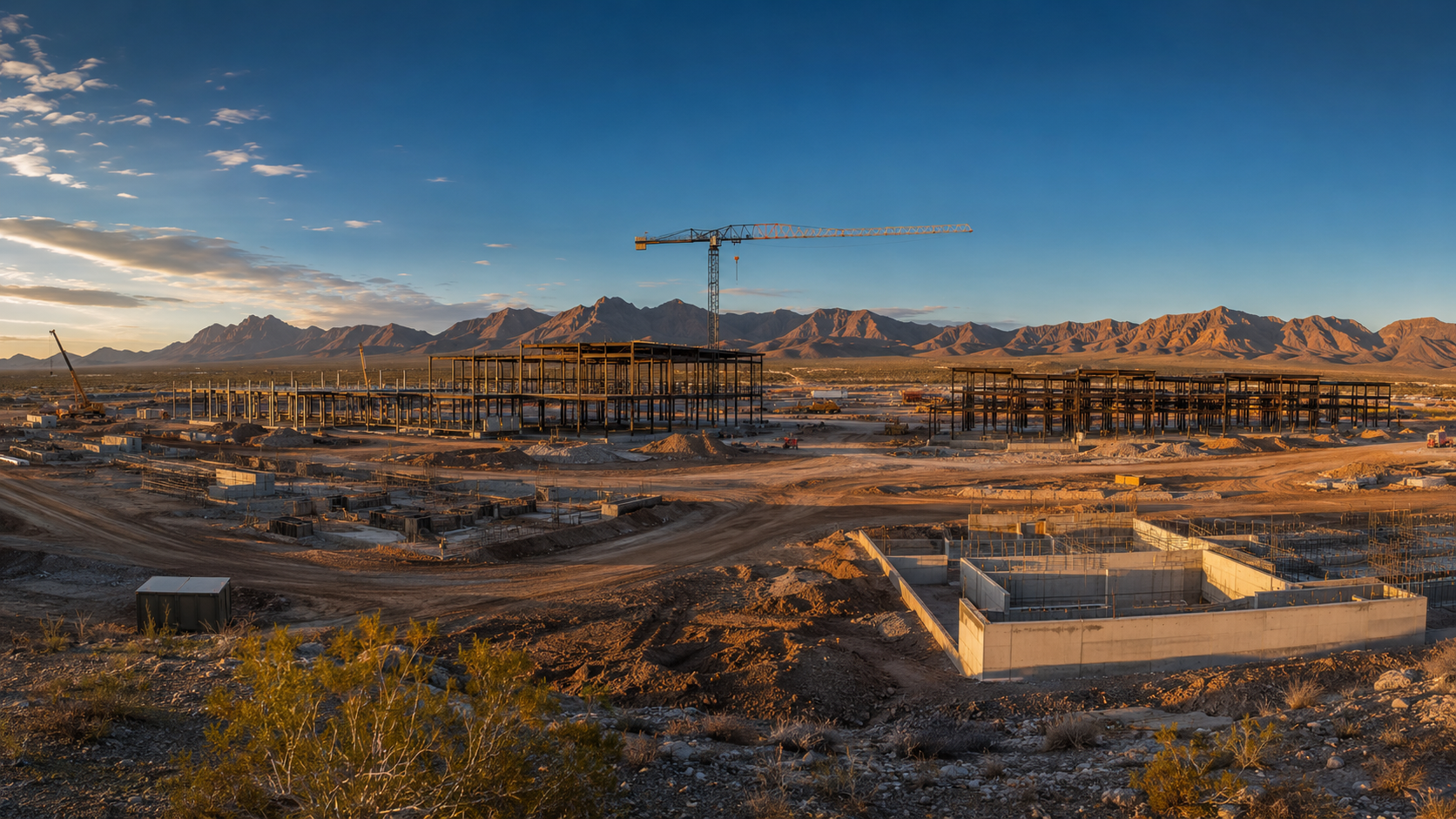
A 62-acre mixed-use project currently in entitlement in the Santa Teresa corridor. Flex-industrial, workforce housing, and retail are planned in a single phased development.
What's Being Built
A 62-acre mixed-use development currently in the entitlement phase proposes to bring 280,000 square feet of flex-industrial space, a 150-unit workforce housing component, and approximately 18,000 square feet of retail and food service to the corridor. The project is designed around a central green spine — an unusual amenity for an industrial corridor — intended to serve the growing workforce that lives and works in the area.
The planning challenge is significant. Santa Teresa straddles county and state jurisdiction, requires coordination with the New Mexico Department of Transportation on two major access points, and must address utility infrastructure that was not designed for this level of growth. These are exactly the kinds of entitlement puzzles where planning expertise intersects with real estate execution.
"The opportunity for developers, municipalities, and landowners is real. So is the risk of moving too fast without understanding the planning, infrastructure, and regulatory landscape."
The Long View
For those of us who have watched El Paso–Juárez grow for decades, the pace of change in Santa Teresa is striking — but not surprising. The borderland has always been an economic engine; what's changed is the scale of investment and the sophistication of the players entering the market.
Land that was priced as agricultural or speculative three years ago is now being underwritten for industrial uses at $8–12 per square foot. Developers who understand the entitlement process, the infrastructure gaps, and the cross-border regulatory environment are positioned to capture real value. Those who don't are learning the hard way.
The next 24 months in this corridor will be defining. Projects in entitlement today will break ground into a market that is still supply-constrained — a favorable position for those who have done the work.
Evaluating land or a project in the Santa Teresa corridor?
Scott is available for consultation on entitlements, feasibility, and brokerage.